


I have come to embrace the MANY uses and value to be found in litter box training puppies. As a breeder I know that litter box training litters of puppies is the beginning of cleanliness training and facilitates house training in the new home. In my work as a dog trainer I have seen the exhaustion and burn out many puppy owners feel after trying to house train very young puppies, puppies who can't hold it through the night, unwell puppies, or puppies who have already learned to be dirty, often on busy work schedules and in busy families.
And as someone who raises puppies very often I know firsthand how tiring it is to get up every night, and to clean up accidents.
I have come to realize that an indoor toilet area is the answer to a surprising number of the most unpleasant and stressful work of puppy raising. I've also come to realize that a litter box not only makes house training easier, but it also decreases the number of accidents, and allows new puppy owners to get a good night's rest.
The benefits even extend into the life of many adult dogs. For dogs who live in urban areas having a toilet inside decreases accidents, allows owners to avoid middle of the night trips outside, and provides for a place to go when weather is severe.
Even for suburban and rural dogs, being trained to use a litter box can be a sanity saver during snow events, artic blasts, ice storms, hurricanes, and other extreme weather events. A kiddy pool with litter or grass sod placed in a garage or back porch will be your best friend when the snow is deep and your dog is small.
Additionally, if you have plans to show your puppy there may be times at indoor shows where the toilet area is nothing more than a fenced off square of shavings, so being comfortable voiding in an indoor litter box may be a welcome skill.
First, let's quickly rule out puppies who probably won't need an indoor toilet area. This doesn't mean you can't use one, just that it's likely less necessary for house training.
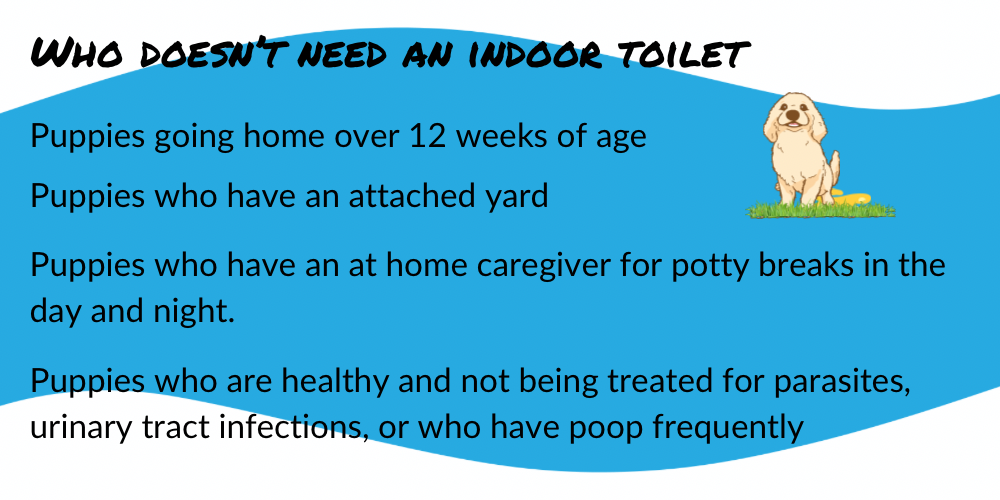
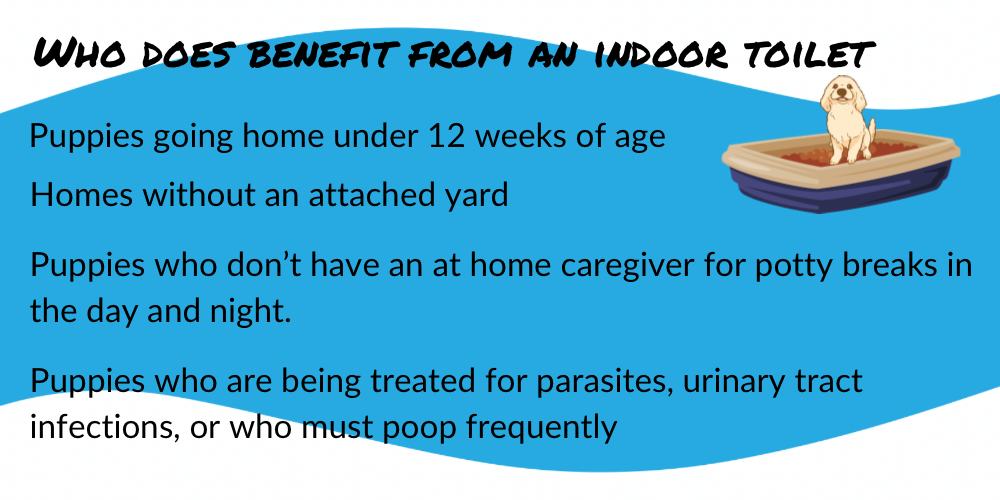
Additionally, Puppies whose owners plan to use a litter box long term, or who can see a need for an extreme weather toilet area at some times.
5. Puppies whose owners cannot be up at night, for any reason, and so cannot be expected to take a puppy out during the night for those early weeks when a puppy often cannot hold it for 8 hours.
For dogs and owners in those situations being able to use a litter box can take a lot of stress and unpleasantness out of puppy raising.
There is fear that offering indoor toilet options will make house training impossible, but this has simply not been our or other professional’s experience. In practice it seems to be the opposite, by providing an indoor toilet accidents are fewer and puppies learn to prefer being clean and “going” in designated toilet areas. This seems to speed house training, prevent backsliding and stinky puppy syndrome during illness, helps avoid dread of being crated, and helps puppies learn that being clean means going potty in designated areas. A win all the way around.