

Management is the “hands off” things we do in order to discourage some behaviors while encouraging other behaviors.
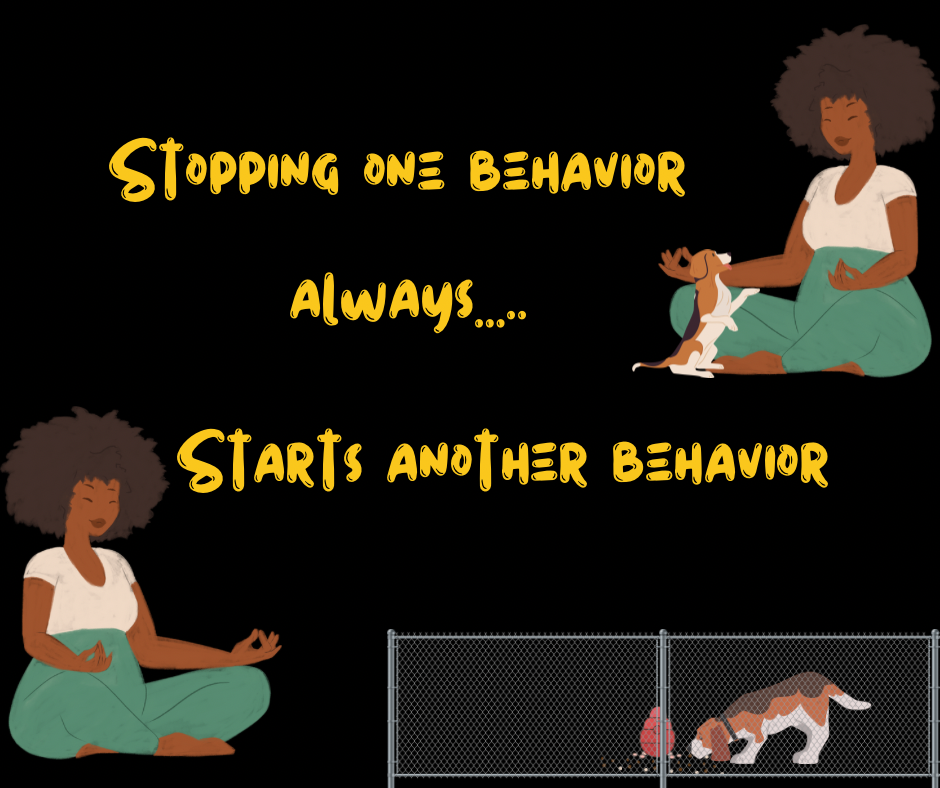
Since our puppies are behaving constantly, It only follows that if we prevent our puppy from doing one behavior, it will by default do another behavior.
If I put my puppy in a playpen (management), they can’t run around with my socks (undesired behavior), but they CAN lay down and rest (desired behavior).
If I walk my puppy on a leash, my puppy cannot run away and jump in the river. This also means my puppy is going to exhibit different behaviors, like walking beside me, pulling on the leash, or relieving itself.
Stoping or preventing one behavior = Opportunity for a different behavior.
In order to create clean toileting habits, we must prevent our puppy from learning unclean habits while they are growing up. Because we all know how hard it is to break a habit! We want to focus on creating the habits we want, while preventing the learning of habits we do not want.
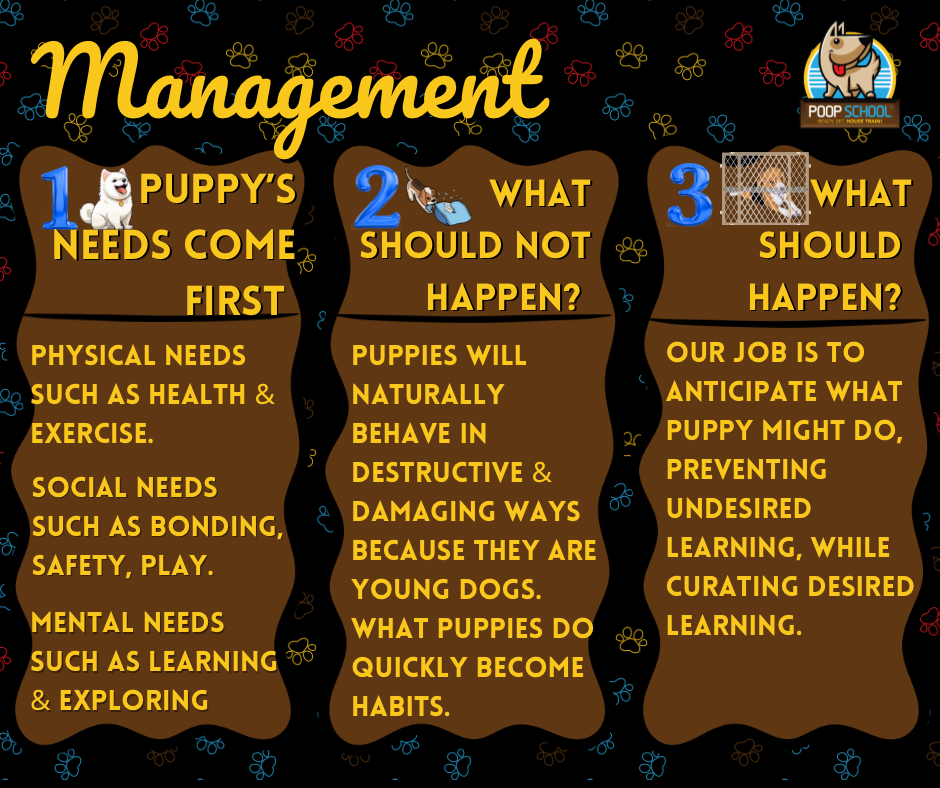
There are three rules of management when house training puppies.
Start here!
1. Define what learning you WANT to happen.
2. Define what learning you do NOT want to happen.
3. Keep puppy welfare as your top priority.
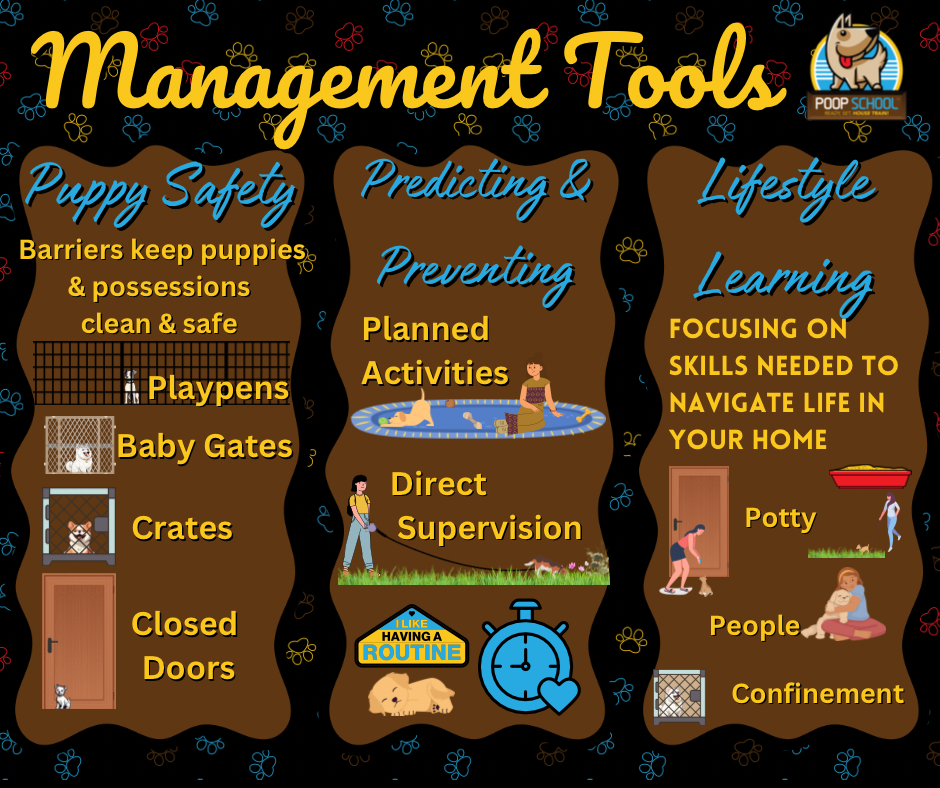
Management Tools: There are a wide variety of tools and tricks we can use to create desirable toilet habits, while preventing undesirable toilet habits.
Almost all effective house training will involved several different types of management tools and techniques. Tools like baby gates, playpens, closed doors, and crates are hugely helpful. Also helpful are techniques like direct supervision (no distractions!), curated activities when confined, and predictable routines.
These are going to change as our puppy grows up and develops physical maturity (for example, and 8 week old puppy may not be able to climb out of their playpen, but a three month old puppy can). Physical maturity is not subject to training and is instead just happens as our puppy grows up, gets stronger, larger, and needs even more food and water to fuel their growing body.
Rules of Good Baby Puppy Management:
Puppy is supervised when not in their crate or playpen.
Supervision = Buddy Leash or confined to a single room WITH a person who is responsible for watching them.
Responsible Party for that time period should focus ON THE PUPPY (phone down, TV OFF or Muted, Computer Shut).
Supervised Puppy Time should start in rooms closest to the “potty door” for the first week, and each few days areas further away from the potty door may be introduced.
Set up a play pen: Playpen must be escape proof (if it’s only a little escape proof your puppy WILL learn to break out, not a great life skill), puppy safe, and large enough for your puppy to have a play zone, toilet zone (for baby puppy’s litter box) and a resting zone (such as a bed or crate).
✅Use the play pen for those times your puppy cannot be supervised fully by a human. This will keep your puppy (and possessions) safe, and prevent accidents.
✅Set your playpen up during week one VERY close to the back door, each week you can move the playpen a bit further from the back door to the “heart” of the house, or for those who work from home, to the office. But ONLY When your puppy is successful getting from the playpen to the outdoor potty zone.
Later if you desired the playpen can be replaced or supplemented with a crate(s) for when you are away from home, at night, or in far areas of the house. Neither crate or playpen should be over used.
✅Create a bedroom area separate, with a crate for sleeping (if large enough this crate can have a litterbox if the puppy cannot make it through the night.
Remember, for the first month or more, puppy is either directly supervised by a Puppy Focused Responsible Party in a manageable room (use baby gates or x pens to block off other rooms), tethered via a buddy leash (6-10 feet long) to a Responsible Party, or in the playpen. Baby puppies left unsupervised will have accidents inside, chew or destroy things, and possibly hurt themselves.
The beauty of management is while we are preventing undesirable behaviors from being practiced and becoming habits we also have an opportunity to reward and reinforce desired behaviors and encouraging those to become habits.
If we focus our teaching on lifestyle learning (behaviors our puppy needs to learn to navigate our world) and spend less time on “obedience” teaching we will find our puppies grow into mannerly companions who have the life skills they need to be enjoyable companions.